
1959 MGA Twin Cam Coupe - Full Restoration

Home Page: Chip B


Broomfield, CO, USA
| Total Posts: 3 | Latest Post: 2025-08-29 |
| Table of Contents | RSS Feed |
Things get more interesting as we turn to look at the cylinder head. Boy, isn't it a work of art that shows "what could have been" for MG. It certainly doesn't have the beauty of the similarly sized Alfa Romeo engines, or the elegance of a 6-cyl Jag, or the power of a Ferrari or other V8/V12 beast... but that's part of what makes it special. It looks smaller, more functional, more spartan - very appropriate for the MG badge. I digress...
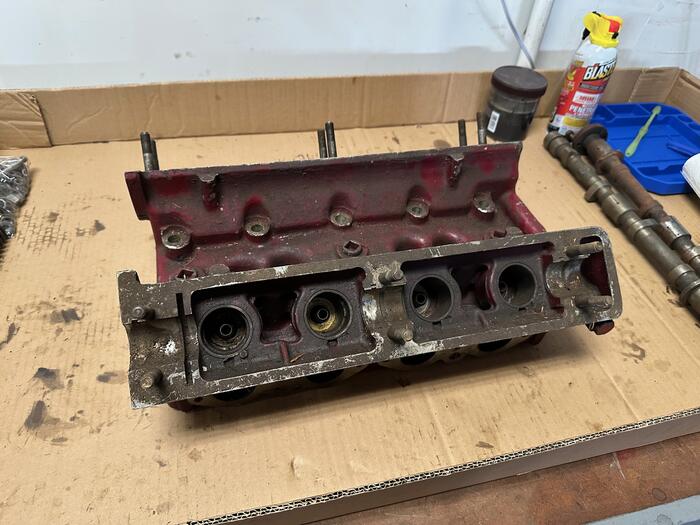
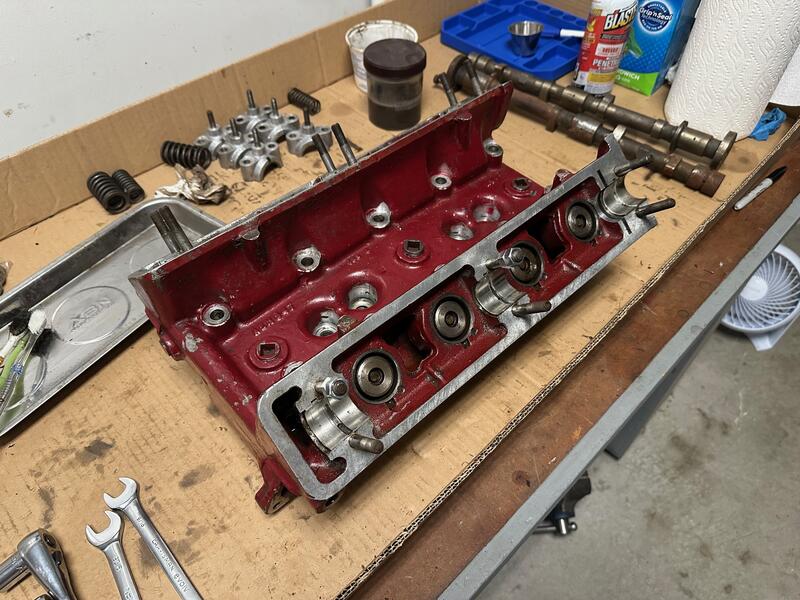
The cylinder head looks at first to be in pretty good shape. It had been partially disassembled by a previous owner, with the cams and exhaust valves removed. It was filthy but cleaned up pretty nicely, good think aluminum doesn't rust...
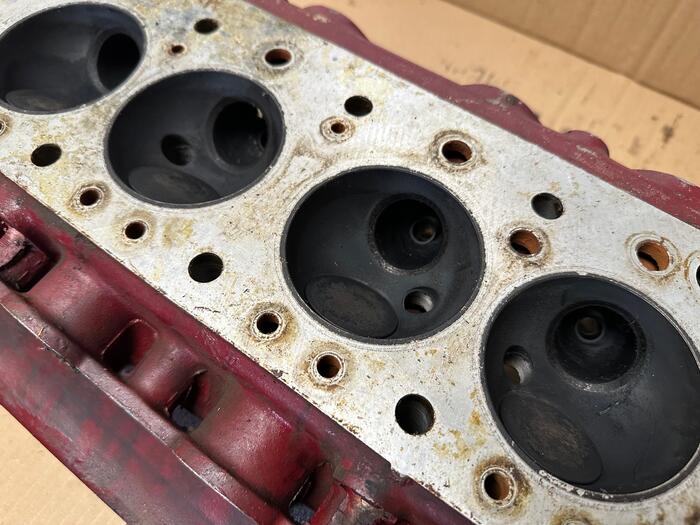
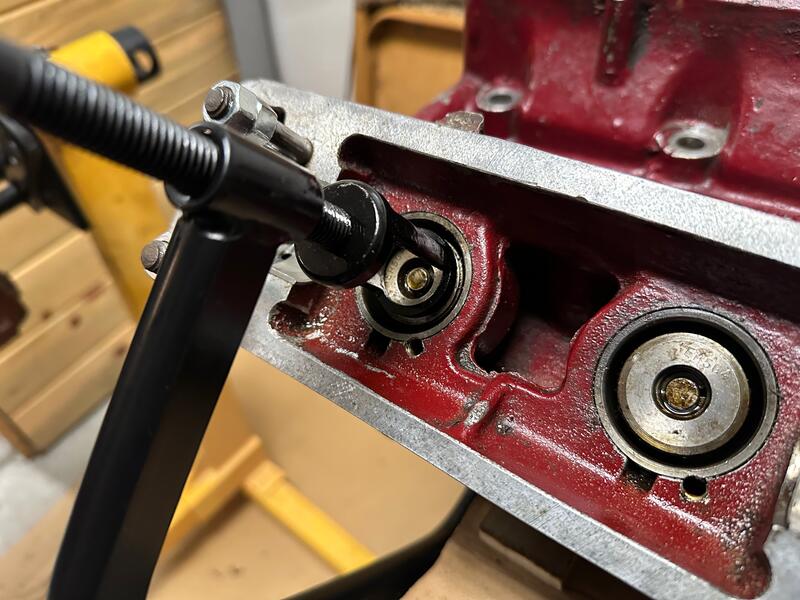
The deck seems flat and the combustion chambers are well shaped without pockmarks or excessive buildup. The exhaust valves had been previously removed and with the exception of one bent valve they look "ok". I'll replace them as a set. I removed the intake valves without incident using a valve compressor tool from Amazon (the type with a C-shaped clamp) and they look great - might as well reuse those too.
The cam bearing caps seem to be in good shape and the bearings themselves seem alright. A new set of bearings isn't very expensive so I'm leaning towards replacing them anyway.
Now for the bad stuff:
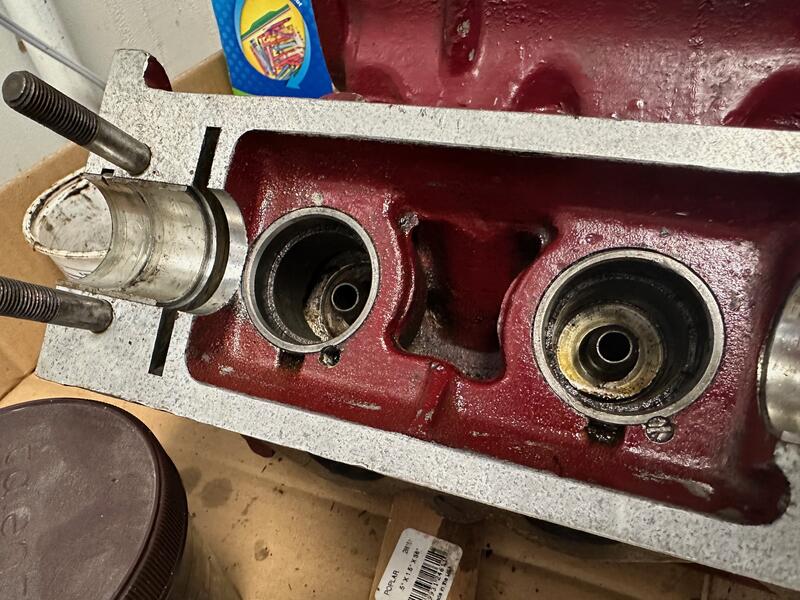
Broken Tappets are evident on the Cylinder 1 and 2 exhaust. YUCK. I wish I knew the history of this car, and how these were found. I guess they were probably driven for some period of time with the broken tappets, because I don't know how else you'd get two of them to break at the same time. I can't remove these from the sleeves, so I'll need to ask the machine shop to help. I have a set of 7 tappets that came with the engine, with one of them not having a chamfer. More mysteries - why are there 7 when 2 have obviously broken in the car? I'll probably do a better inspection of what I have and reuse any that seem ok.
Tappet Sleeves seem ok, aside from the two with broken tappets. I spoke with Jim Alcorn and he recommends replacing with bronze sleeves (pressed into the head and finished by the machine shop). I'll probably go this direction, since I think I need to replace two of them and don't want to mismatch new bronze with old parts (anyone know what they're made of??).
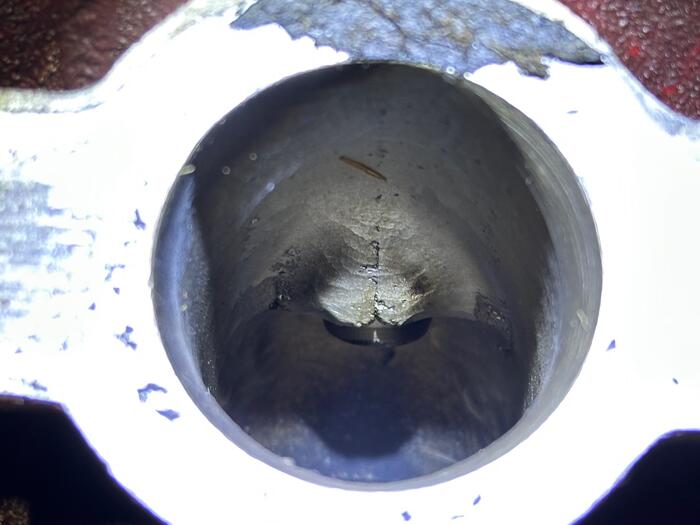
The Intake Ports show another surprise - looks like they were welded up where the valve guides are pressed, and have cracked over time. Not happy about this. Will chat with machine shop about whether they think they can repair this... don't really know how big of a deal it is yet.
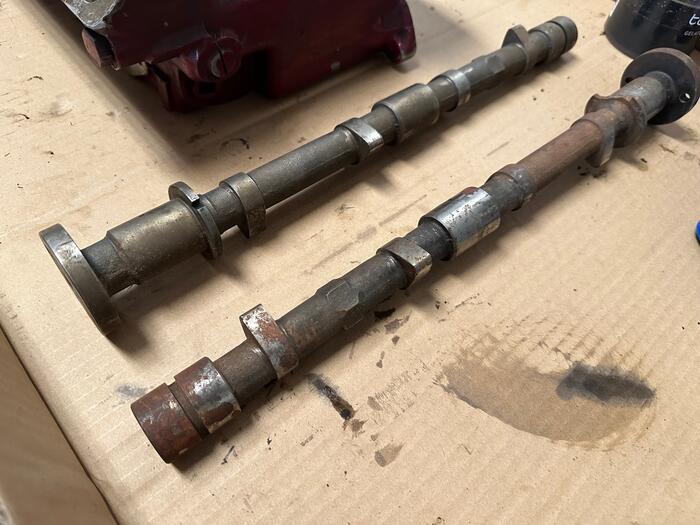
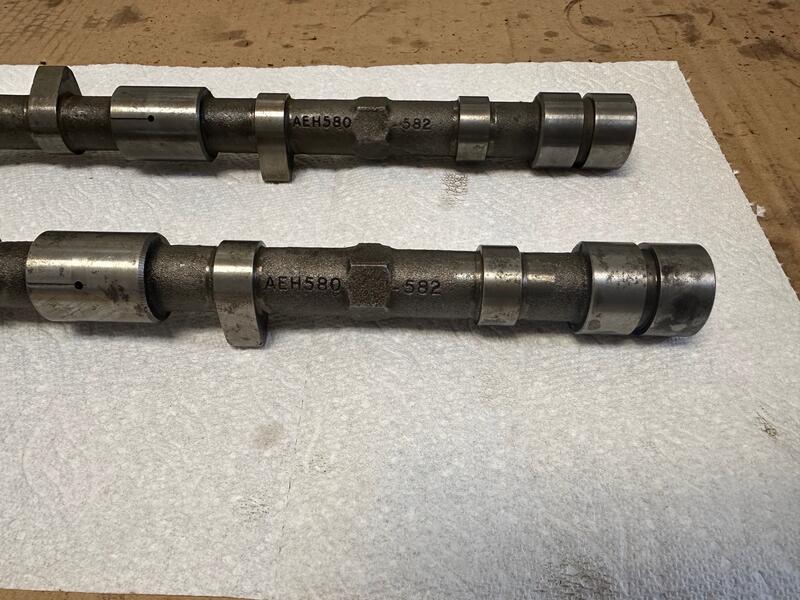
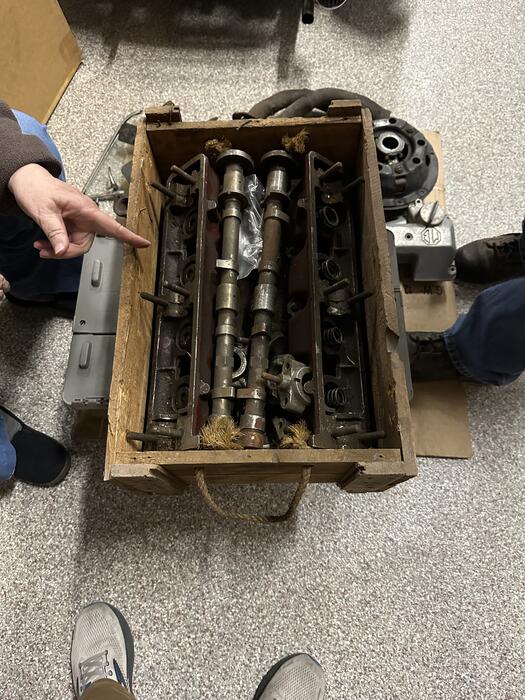
Camshafts are a rusty mess and certainly show signs of wear. I'm guessing the previous owner did a poor job of maintaining valve clearances as some of the cam lobes are pitted/chipped. The alignment shoulder/fin on the "front" of one of the shafts is broken, which doesn't necessarily seem like a dealbreaker but probably worth fixing anyway. I scrubbed the camshafts down with some penetrating oil ato remove the iron oxide, which exposed the rotted base metal underneath. Why on earth would you let this rust like this?!? I'm planning on sending these to Delta Cams to have them make them pretty... fingers crossed they'll take the job.
Next step is taking the head to the machine shop to see what they think.
IMG 7698
IMG 7711
IMG 7722
IMG 7782
IMG 7793
IMG 7823
IMG 7716
IMG 7776

Cylinder Head Studs were removed using the double nut method, lots of patience, and plenty of penetrating oil. I have "JB Blaster" oil which I probably picked up at Walmart - don't love it, but it seems to be working ok. I let the studs sit with oil for several days and they finally came out after some enthusiastic "tapping" on the top and sides of the studs with a wrench or hammer. Nothing to bend or deform the studs, but enough to loosen any gunk. Felt like I dodged a bullet by non breaking anything.
Oil Pan of course came off uneventfully, and I was disappointed but not surprised to find quite a bit of "bits" in the pan. Lots of metal chunks. Hm.
Pistons and Rods removed without incident. #4 piston had already been removed at some point by a previous owner, so I'm disappointed I can't see exactly what was wrong with it. The other pistons actually look fairly decent and seem to be the higher compression design appropriate to the earlier '59 car. I'm planning on reusing the connecting rods once they're magnafluxed to check for cracks.
Main Bearings were accessed by pulling the bearing caps off using an appropriate screw and some 2x2s as spacers (see photo). I felt like this was much more controlled and comfortable than using a slide hammer as is often recommended. A bit of penetrating oil and all three caps came right off. The bearings look pretty decent. I'll plan to replace them but I'm happy they don't look shot.
Crankshaft seems to look ok. Haven't yet mic'd the shaft to see if I need to worry about bearing fitment but but nothing looks too bad.
The Cylinders look ok aside from #4, which had the piston removed and has some rust along the top half of the cylinder surface. The bores measure: (1) 2.980, (2) 2.977, (3) 2.976 (4) 2.975”. This is a max of ~0.011" over STD, so I'm thinking we'll need to go with 20 or 30 over pistons. I'm going to take it to the machine shop to see how much material they think they need to take off and then order pistons.
I'll do another post about the cylinder head - much more "excitement" found there.
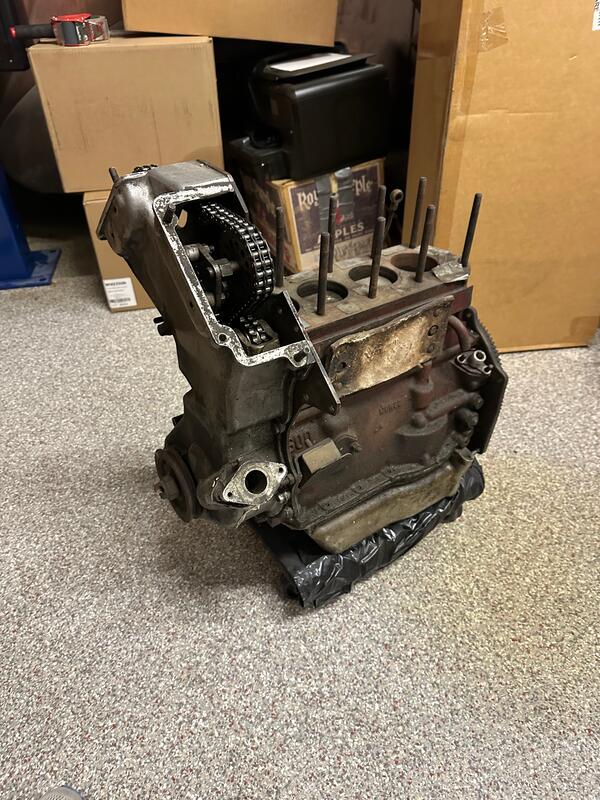
TC engine as received from previous owner
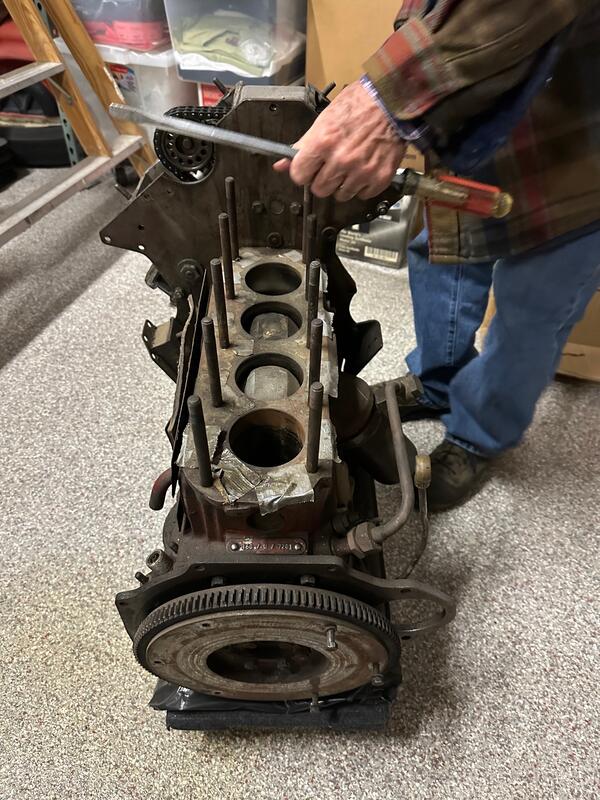
IMG 5839
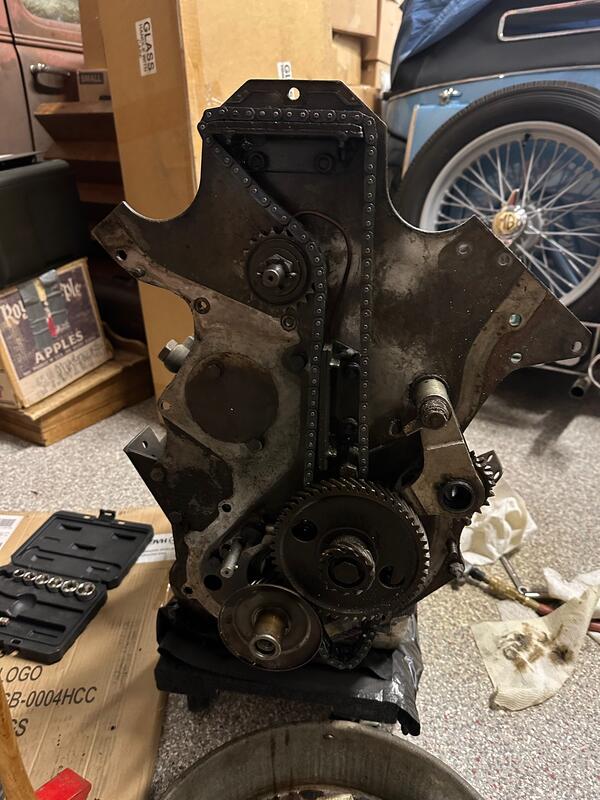
Timing chain, minus sprockets and cams

Jessi scrubbing the engine so we can see what we're doing
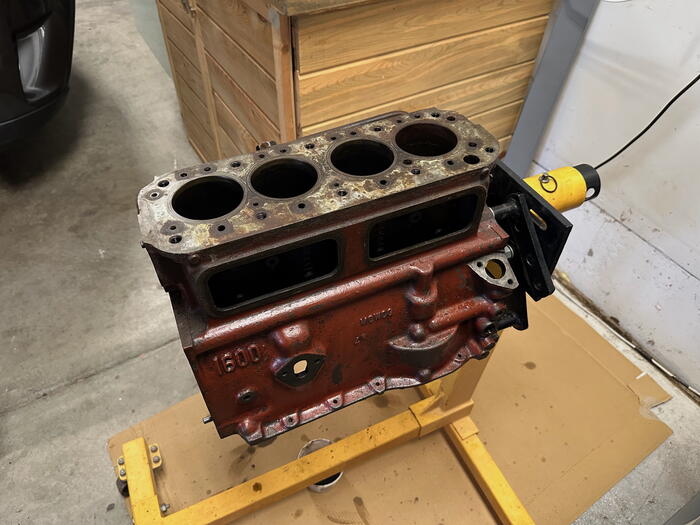
Mounted up to the engine stand, studs removed
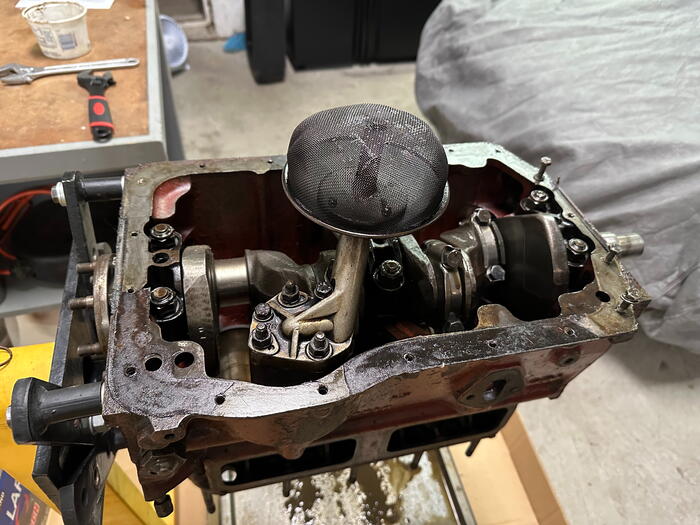
IMG 7603
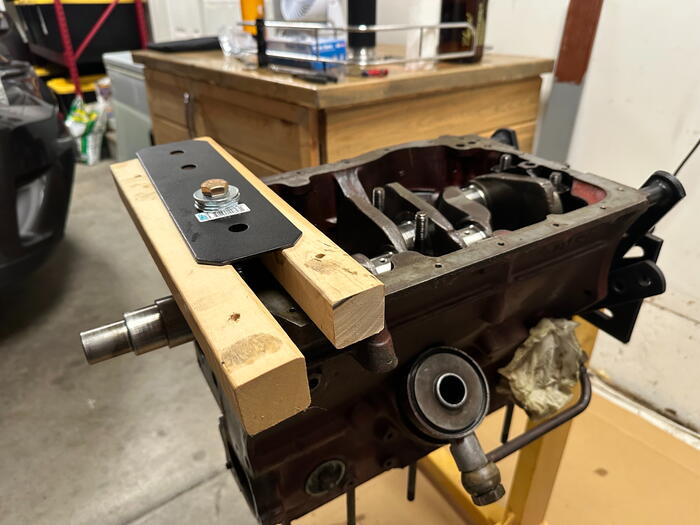
Setup for extracting the bearing caps
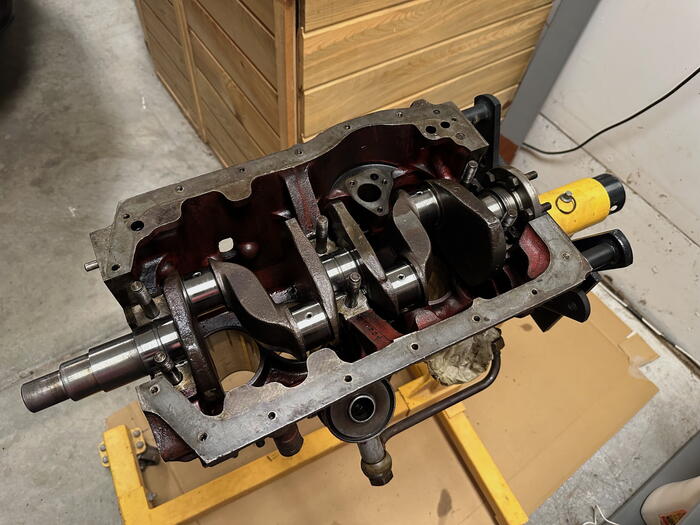
IMG 7682
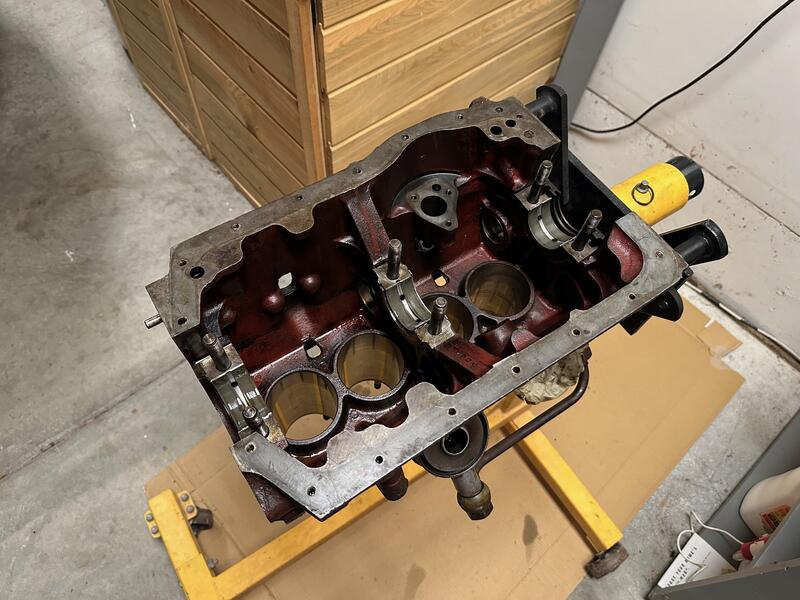
Camshaft removed
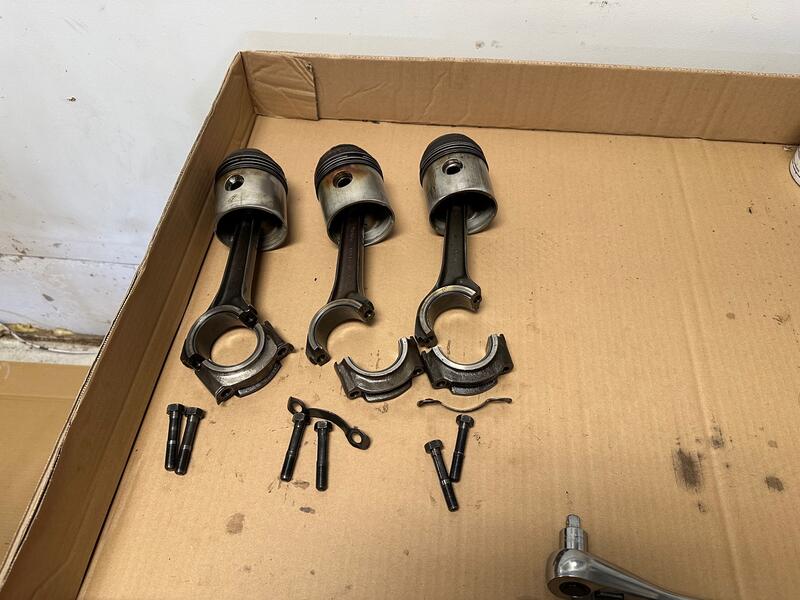
Pistons 1-3 (#4 missing)
No comments have been posted yet...
Want to leave a comment or ask the owner a question?
Sign in or register a new account — it's free
Joe & Cathy had purchased this car some number of years ago but never started the restoration project. It's been stored in a garage awaiting time & resources to come back to life. The engine & transmission had been removed by the previous owner and fitted with a 3-main MGB engine, and the interior was in quite a state of "disrepair". Certainly new seat upholstery and headliner work required. The original engine was provided with the car, with the #4 piston missing. Hm... sounds a lot like an early 9.9:1 compression car with a blown piston.
The body is in pretty good shape (no rust apparent), although painted a rather horrible "refrigerator white" color. There is some indication of filler on the rear valence, possibly form a long-ago rear end incident. We'll aim to fix this properly when we begin on bodywork.
Upon taking possession of the car, we've found that most of the engine is present although partially disassembled. The head was separated from the block and disassembled. The engine block was assembled, although missing the #4 piston and rod as mentioned above. Immediately upon poking around we found the chain had started falling apart, with several rollers cracked or missing sections. Yikes! Indication of associated wear is visible on the sprockets, which will need to be replaced.
Other stuff... the car comes with a close ratio gearbox (original gearbox but not currently fitted), proper TC dunlop wheels, and a box of miscellaneous parts.
We're going to start this project by disassembling the engine and getting its rebuild started. I'm much more comfortable with engine / mechanical work than bodywork and fitting everything together. I'm hoping we can get the engine off to the block shop and start rebuild on the stand while we figure our the plan for the body.
More to come! Safety Fast!
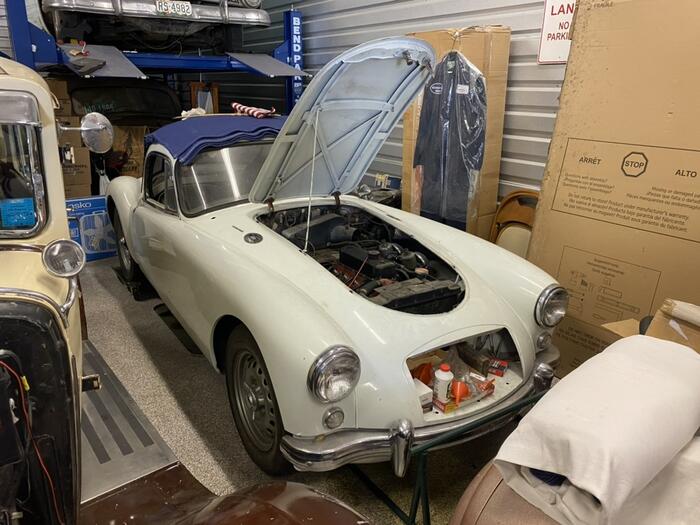
40408561-6186-40FE-AA6B-B50F4DCE8BC3 1 105 c
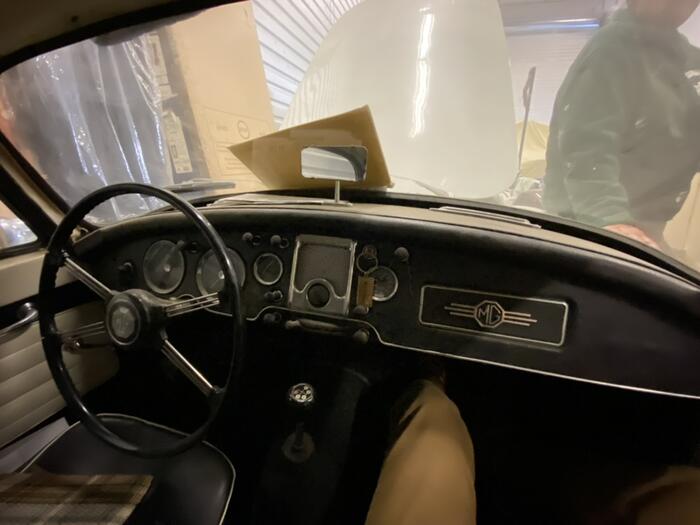
0224CBC5-A0CE-488E-AD9B-B52B6F277903 1 105 c
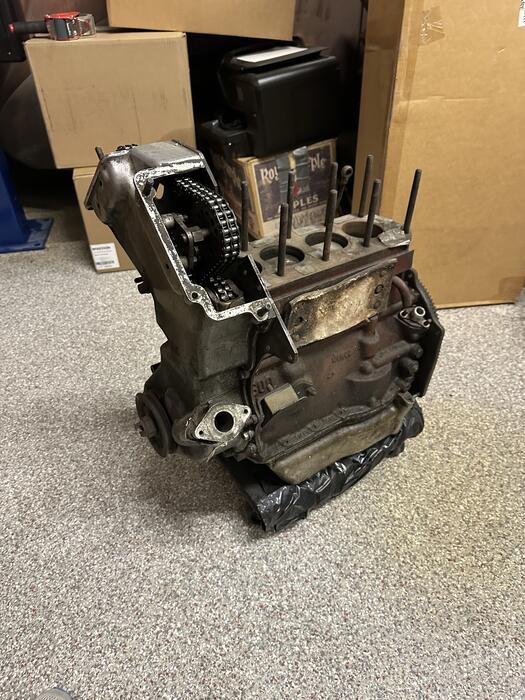
IMG 5835
IMG 5853

Want to leave a comment or ask the owner a question?
Sign in or register a new account — it's free



No comments have been posted yet...
Want to leave a comment or ask the owner a question?
Sign in or register a new account — it's free