
David Terry's Journal
Home Page: David Terry


Tomball, TX, USA
| Total Posts: 9 | Latest Post: 2014-11-03 |
| Table of Contents | RSS Feed |
I just finished replacing the beat up trunk lid on my 76B. The replacement lid came with a nice luggage rack that I intended to install once the lid was repainted and in place. I quickly realized that I had failed to take into account the condition of the rack. Although the metal was in good shape, the screw holes were all stripped out and largely out of round on the rear horizontal member. After several trips to Ace Hardware to find a variety of different size SS screws, I had an epiphany: instead of screwing the cross members directly to the horizontal member, why not secure them to a substrate INSIDE the cross member. The next question is obvious: what am I going to use? Having some left over shelf standards from a recent woodworking project, I noticed that the screw holes for the standards lined up perfect with the screw holes for the cross member. A few snips with the aviation shears to cut them to length and the rack was reassembled and tight as a drum. Fifteen minutes later and the rack was one the car. Nice rack, eh?
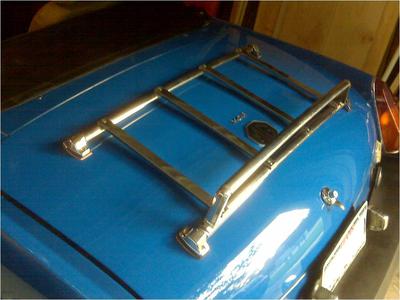
Newly Repaired Luggage Rack Installed

Most folks in the MG circle appear to have been servicing their cars for some length of time and possess the ready mechanical skills and experience to thrash whatever ills appear before them. While I'm in my element when it comes to woodworking, I'm playing catch-up with regard to automotive engines.
My ZS dashpot would not hold oil. Every post I have read and every other knowledgable resource tells me that the oil in the dashpot is essentially supposed to stay there. Except for the Zenith-Stromberg. Somewhere along the way, Zenith-Stromberg carbs either did not get that memo or simply discarded it. I have, in fact, gotten very good at filling mine up. That is not necessarily the skill I was aiming for. I don't need a diesel MGB. Obviously, the O-ring in the bottom needed replacement.
Before I pulled mine apart and lost or broke something important, I got a hold of a well worn ZS off ebay. Used it as a guinea pig to make sure I knew what I was doing. I'm a visual person. I have to have my hands on something and see it before it typically sinks in. I'm sure it'll come in handy for other carb related endeavors, too.
When I removed the piston from the carb, I was unprepared for the black gooey film covering the metal surfaces. It looked worse than the donor carb. Once I got the mess cleaned off, I then proceeded to replace the O-ring and reinstall the piston into the carb along with a new diaphragm. Then the most amazing thing happened when I started it up: it ran. RPMs holding steady at around 900-1000 and no noticeable adverse engine performance. I didn't know what else to do so I hopped in and went for a drive.
Clearly, I'm being lulled into a false sense of security.
My ZS dashpot would not hold oil. Every post I have read and every other knowledgable resource tells me that the oil in the dashpot is essentially supposed to stay there. Except for the Zenith-Stromberg. Somewhere along the way, Zenith-Stromberg carbs either did not get that memo or simply discarded it. I have, in fact, gotten very good at filling mine up. That is not necessarily the skill I was aiming for. I don't need a diesel MGB. Obviously, the O-ring in the bottom needed replacement.
Before I pulled mine apart and lost or broke something important, I got a hold of a well worn ZS off ebay. Used it as a guinea pig to make sure I knew what I was doing. I'm a visual person. I have to have my hands on something and see it before it typically sinks in. I'm sure it'll come in handy for other carb related endeavors, too.
When I removed the piston from the carb, I was unprepared for the black gooey film covering the metal surfaces. It looked worse than the donor carb. Once I got the mess cleaned off, I then proceeded to replace the O-ring and reinstall the piston into the carb along with a new diaphragm. Then the most amazing thing happened when I started it up: it ran. RPMs holding steady at around 900-1000 and no noticeable adverse engine performance. I didn't know what else to do so I hopped in and went for a drive.
Clearly, I'm being lulled into a false sense of security.
Member Comments on Journal Entry: Project 2: Lunch With Stromberg ↵
No comments have been posted yet...
Want to leave a comment or ask the owner a question?
Sign in or register a new account — it's free
I decided to tackle the worn appearance of my rostyle wheels by restoring them to their near-original appearance. Researched a number of forums on how to actually do this and found Mike Beagley's site. Very good descriptions on how to proceed and a lot of good step by step photos.
Stopped by Ace Hardware and bought cans of primer; semi-gloss black; metallic nickel, and clear coat Rustoleum paint. I also bought some frog tape to do the masking. I proceeded to use my spare tire as a test case to ensure that I didn't completely screw things up and to assess how well the paint adhered. The hapless victim didn't complain much when pulled out of its slumber in the boot. I decided that I would do the black sections first, allow the paint to dry and cure, THEN go back with the metallic at a later date. Having read a number of entries related to peeling paint, I suspected that this may be partially due to the paint not having cured. Twenty minutes with an Exacto knife and I was ready to paint. Two hours later and I had a finished wheel that looked a lot better than I was expecting. I left it to dry overnight and put it back in the boot.
The following Friday arrived full of promise (this is called foreshadowing). I had the day off and was poised to begin my great adventure. Suffice it to say that the first three wheels went more or less without incident. I did have problems getting the tape to adhere to the wheel surface. Given the heat and humidity that defines Houston, I thought that may have been the cause (yes, I cleaned the wheels beforehand and degreased them). Any overspray was neatly corrected with a rag dampened with mineral spirits. Then I started on the final wheel....
The clouds had been building all day. Rain was coming. I had the wheel ready to go. BUT the masking tape had simply lost all adhesion. Time to remask. Did I hear thunder? Got the wheels primed. Time to wait. Lightning in the distance. Good, the primer is dry. Time to spray it black. Oh no! Out of paint!! Hop in truck, drive hellbent for leather to Ace. Buy another can of black. Drive home. Spray wheel. Oh no! It's the wrong paint!! Read the can, dummy!! Hop in truck, drive hellbent for leather to Ace. Again. Buy another can of black paint. Read can first. Drive home. Clean off gooey mess from painting mishap. Wind is picking up. There goes the newspaper. I can still do this. There's still time. There must be. Reprimed wheel. Waiting. Waiting. Waiting. Oh, good. It's dry. Aim black spray can. Check to make sure it's the right one. It is. Fire. Wow, the wind is really helping those VOCs flash off the paint. Clear coat applied. Hear comes the rain. Let's get the wheels under cover.
Just made it. I'll wait a couple of weeks to tackle the metallic portions.
Not bad if I say so myself.
Stopped by Ace Hardware and bought cans of primer; semi-gloss black; metallic nickel, and clear coat Rustoleum paint. I also bought some frog tape to do the masking. I proceeded to use my spare tire as a test case to ensure that I didn't completely screw things up and to assess how well the paint adhered. The hapless victim didn't complain much when pulled out of its slumber in the boot. I decided that I would do the black sections first, allow the paint to dry and cure, THEN go back with the metallic at a later date. Having read a number of entries related to peeling paint, I suspected that this may be partially due to the paint not having cured. Twenty minutes with an Exacto knife and I was ready to paint. Two hours later and I had a finished wheel that looked a lot better than I was expecting. I left it to dry overnight and put it back in the boot.
The following Friday arrived full of promise (this is called foreshadowing). I had the day off and was poised to begin my great adventure. Suffice it to say that the first three wheels went more or less without incident. I did have problems getting the tape to adhere to the wheel surface. Given the heat and humidity that defines Houston, I thought that may have been the cause (yes, I cleaned the wheels beforehand and degreased them). Any overspray was neatly corrected with a rag dampened with mineral spirits. Then I started on the final wheel....
The clouds had been building all day. Rain was coming. I had the wheel ready to go. BUT the masking tape had simply lost all adhesion. Time to remask. Did I hear thunder? Got the wheels primed. Time to wait. Lightning in the distance. Good, the primer is dry. Time to spray it black. Oh no! Out of paint!! Hop in truck, drive hellbent for leather to Ace. Buy another can of black. Drive home. Spray wheel. Oh no! It's the wrong paint!! Read the can, dummy!! Hop in truck, drive hellbent for leather to Ace. Again. Buy another can of black paint. Read can first. Drive home. Clean off gooey mess from painting mishap. Wind is picking up. There goes the newspaper. I can still do this. There's still time. There must be. Reprimed wheel. Waiting. Waiting. Waiting. Oh, good. It's dry. Aim black spray can. Check to make sure it's the right one. It is. Fire. Wow, the wind is really helping those VOCs flash off the paint. Clear coat applied. Hear comes the rain. Let's get the wheels under cover.
Just made it. I'll wait a couple of weeks to tackle the metallic portions.
Not bad if I say so myself.
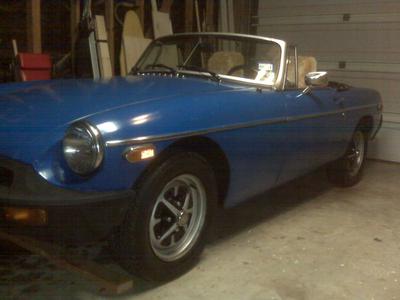
Newly Restored Rostyle Wheels: Part 1
Member Comments on Journal Entry: Project 1: Rostyle Wheel Rejuvenation ↵
No comments have been posted yet...
Want to leave a comment or ask the owner a question?
Sign in or register a new account — it's free



No comments have been posted yet...
Want to leave a comment or ask the owner a question?
Sign in or register a new account — it's free